
Road Accident: What to Do in the First Minutes, and How the Good Samaritan Law Protects You
This is general information, not medical or legal advice. Facts are from public sources, checked on 21 September 2026 (system date). Please call the emergency services first. In a real emergency, follow the instructions of the emergency operator.
Seeing a road accident is frightening. Knowing a few simple steps can help you act calmly and safely.
First steps
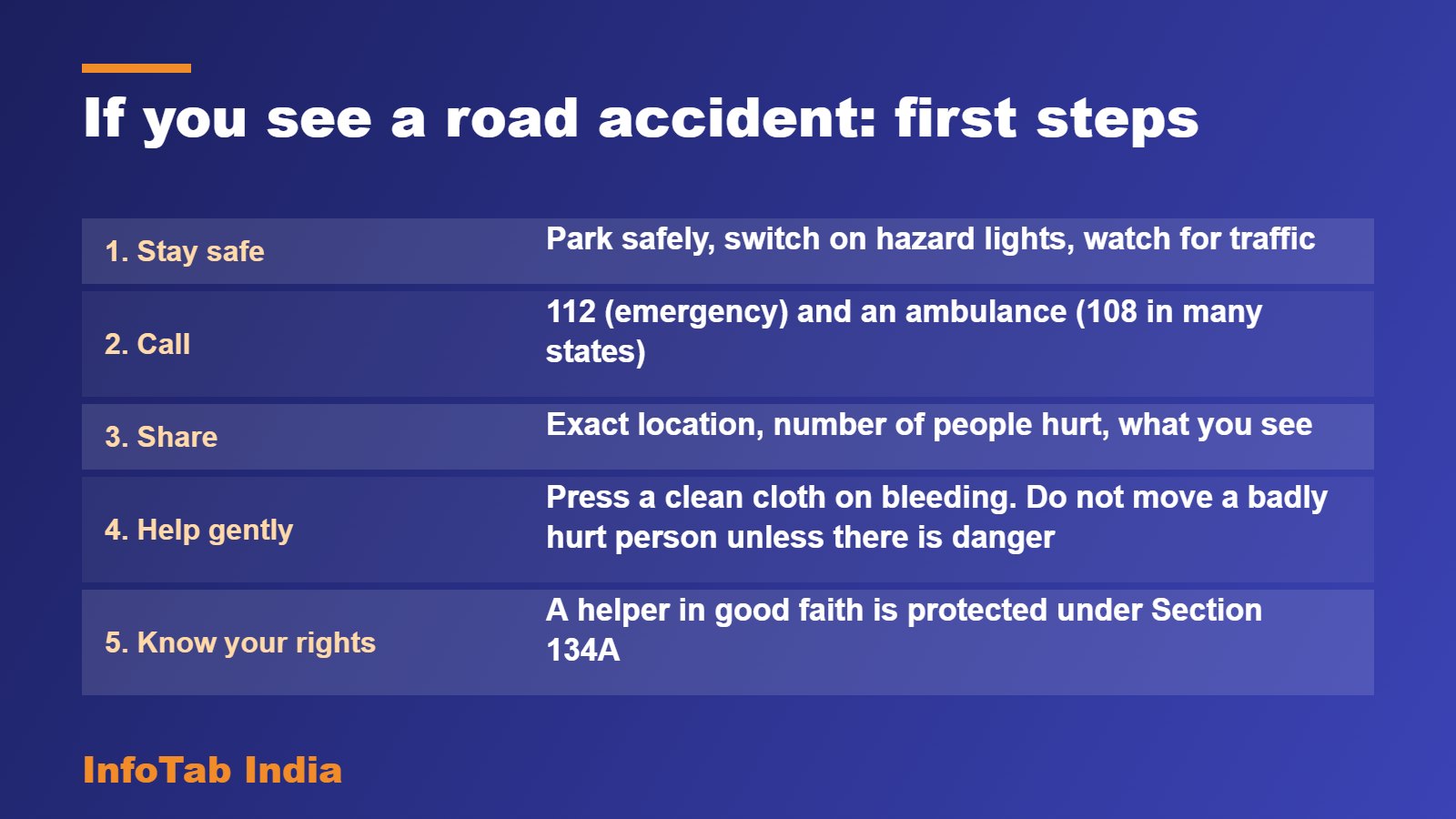
- Keep yourself safe. Park away from the traffic, switch on your hazard lights, and do not stand on the road.
- Call for help. Dial 112, the national emergency number, and ask for an ambulance. In many states you can also call 108.
- Give clear details. Tell them the exact place (a landmark or highway number helps), how many people are hurt, and whether there is fire or leaking fuel.
- Help gently if you can. If someone is bleeding, press a clean cloth on the wound. Talk to them and keep them calm.
- Do not move a badly injured person unless there is danger, such as fire. Moving them can make injuries worse.
- Do not crowd. Ask people to keep the road clear for the ambulance.
Your protection as a helper: Good Samaritan provision
Many people hesitate to help because they fear police questions or legal trouble. Section 134A of the Motor Vehicles Act, 1988 protects a “Good Samaritan”, a person who helps an accident victim in good faith and without expecting anything in return. In simple terms:
- A Good Samaritan is not liable in civil or criminal cases for actions taken in good faith to help.
- Hospitals are directed to treat the injured person without first insisting on payment or police registration.
- A helper cannot be forced to reveal personal details, and can give information anonymously if they wish.
The exact rules and directions are in the law and in the government’s guidelines. This is not legal advice.
Prevention
- Wear a seat belt or helmet on every trip.
- Do not use a phone while driving, and never drive after drinking.
- Keep to speed limits, especially near schools and highways.
This is general information, not medical or legal advice. Facts are from public sources, checked on 21 September 2026 (system date).