
Pamukkale, Turkey: The White Terraces of the “Cotton Castle”
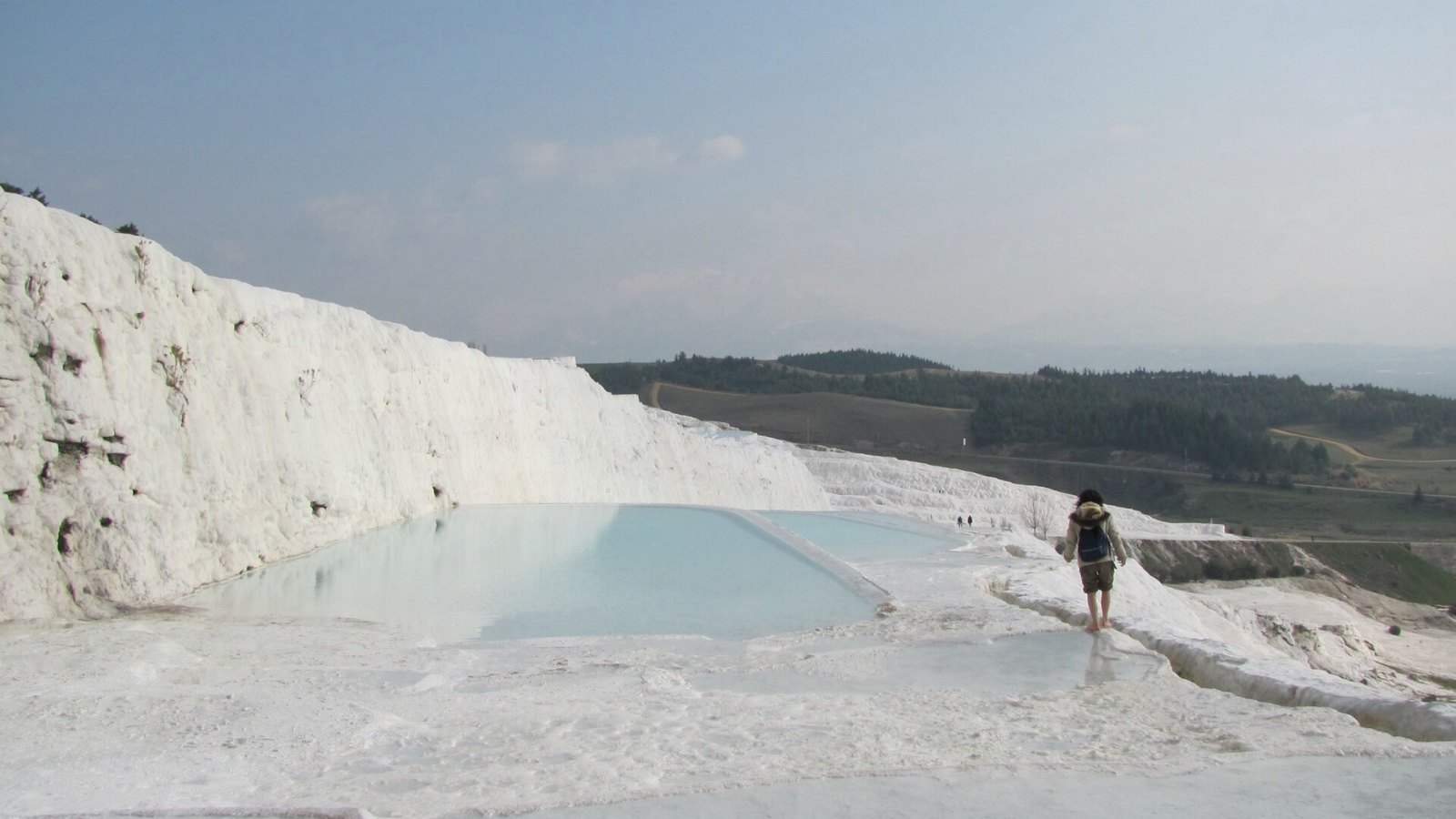
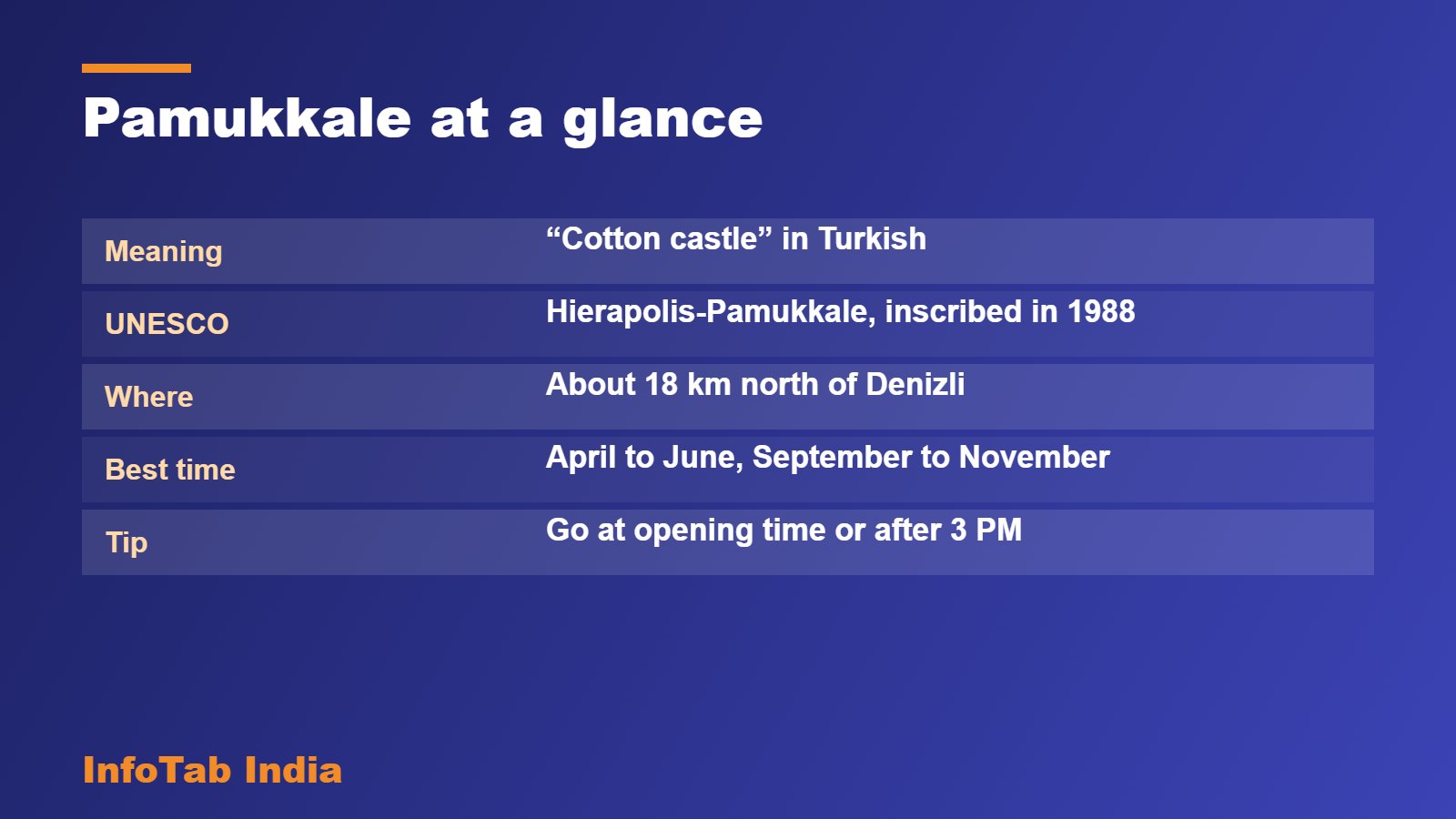
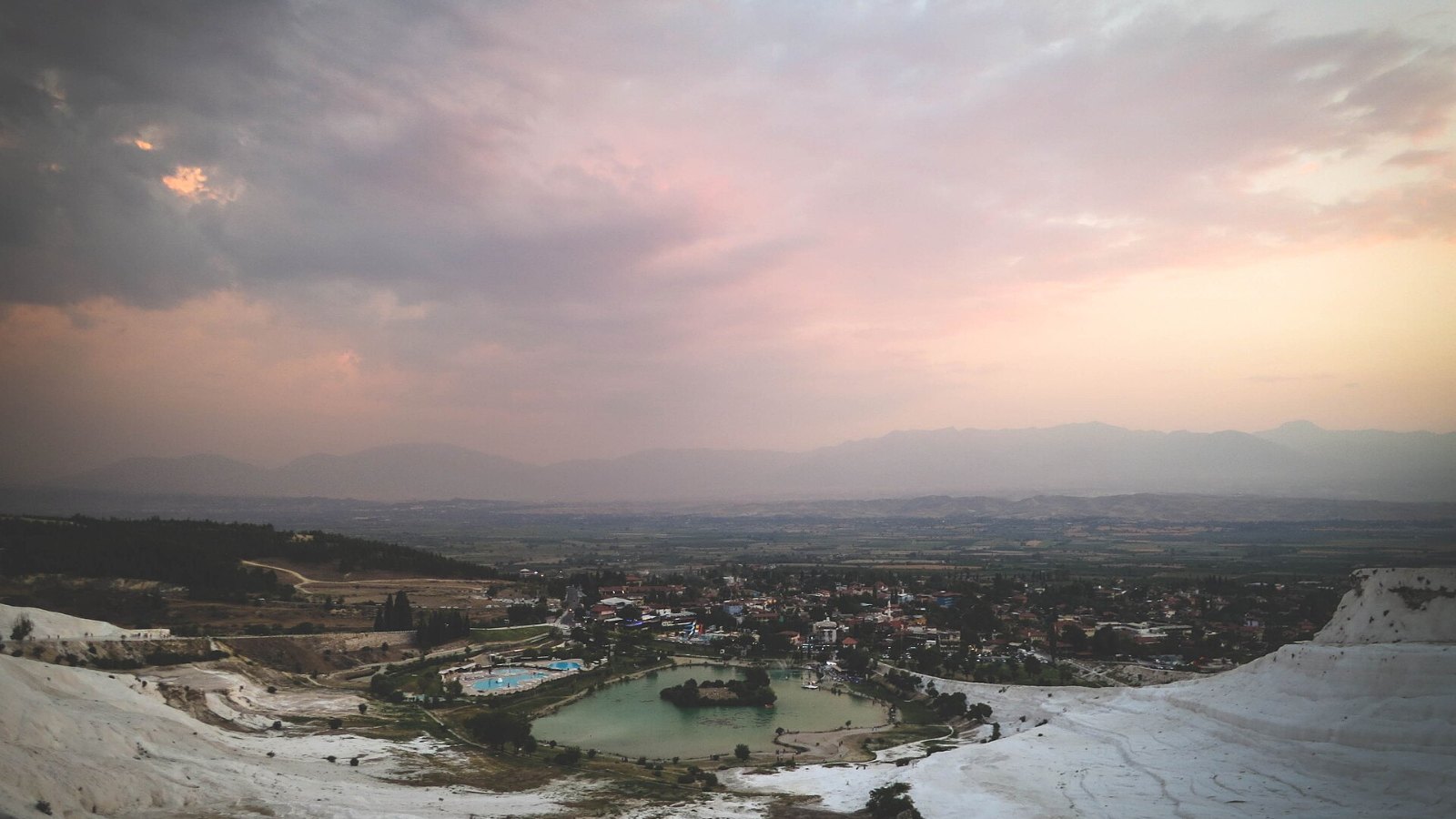
Pamukkale means “cotton castle” in Turkish, and one look at its bright white terraces shows why. Together with the ancient city of Hierapolis, it is a UNESCO World Heritage Site in Denizli Province, south-western Turkey.
Quick facts
- What it is: terraces of white travertine (a mineral rock) formed by warm, calcium-rich spring water flowing down a cliff of about 200 metres, over roughly 400,000 years.
- UNESCO: Hierapolis-Pamukkale was inscribed in 1988 for its natural and cultural value.
- Where: about 18 km north of the city of Denizli.
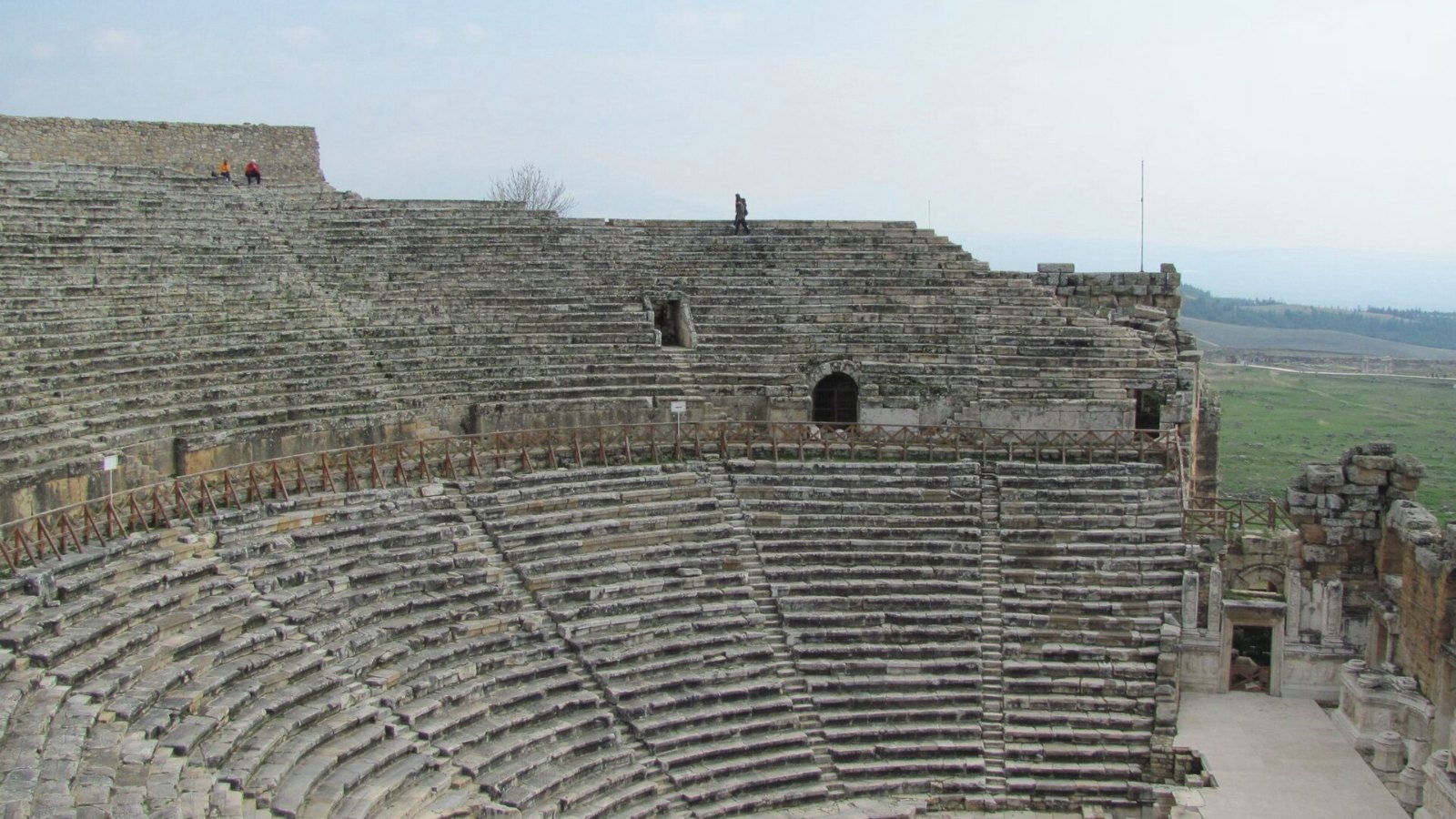
- Hierapolis: founded in the late 2nd century BC, with a large Roman theatre, bath complexes and a necropolis stretching over two kilometres.
Best time to visit
Spring (April to June) and autumn (September to November) are usually the most comfortable, with temperatures roughly between 15°C and 25°C. July and August can reach about 35°C. Going right at opening time or late in the afternoon helps you avoid the biggest crowds.
Tips for travellers
- Wear comfortable shoes. Visitors are usually asked to walk barefoot on the terraces to protect them, so check the rules on arrival.
- Carry sunscreen, a hat and water. The white surface reflects strong light.
- Follow the marked paths and rules. The terraces are delicate.
- Travellers from India need a visa for Turkey. Please check the latest rules on the official Turkish e-visa site and your embassy before booking.
What else to see
The ancient city of Hierapolis is right above the terraces. Many visitors also see its theatre and necropolis and the nearby thermal pools.
Information is from public reports and official pages, checked on 20 September 2026. Details can change, so please confirm on official sources before you travel or buy. Travel rules and prices can change.