
Pitru Paksha 2026: Dates, Shraddh Tithi List and Simple Guide
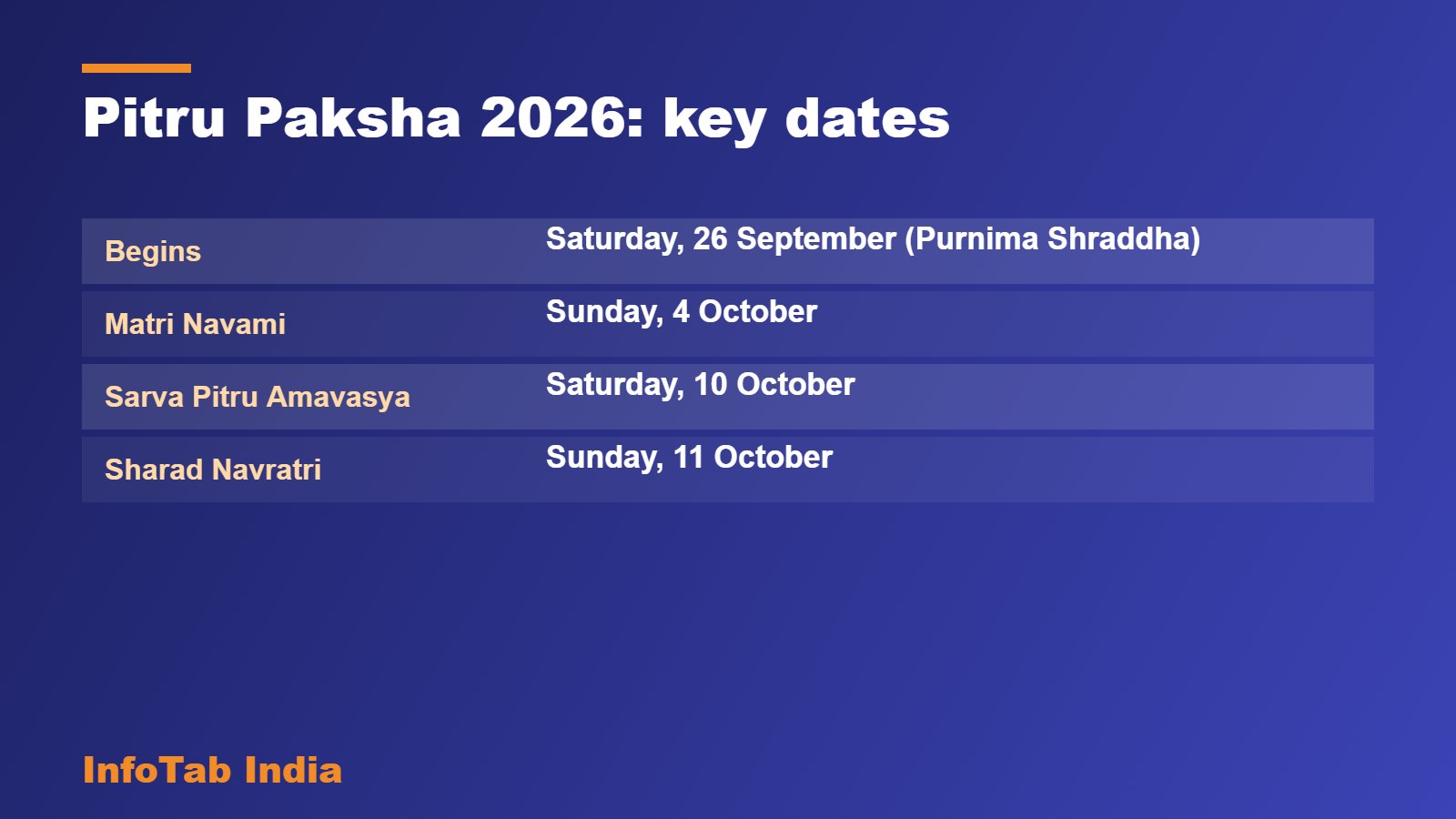
Pitru Paksha is a fortnight when many Hindu families remember and honour their ancestors. In 2026 it begins on Saturday, 26 September, the day after Ganesh Visarjan, and ends on Saturday, 10 October. Here is a simple guide to the dates, the meaning and what families commonly do.
Quick facts
- Starts: Saturday, 26 September 2026 (Purnima Shraddha)
- Ends: Saturday, 10 October 2026 (Sarva Pitru Amavasya)
- Length: 15 days
- Next festival: Sharad Navratri begins on 11 October 2026
What is Pitru Paksha?
“Pitru” means ancestors and “paksha” means a fortnight. It is a period of about fifteen lunar days set aside to remember parents, grandparents and earlier generations. Traditionally, families offer water and food in the name of their ancestors, give to people in need and spend time in quiet remembrance.
Many people see it as a time to say thank you. It is also a chance to share family stories with children so that names and memories are not lost.
Pitru Paksha 2026 dates and shraddh tithi list
Dates follow the New Delhi panchang and were checked against the official Rashtriya Panchang. Timings can differ a little in other cities.
Tithi dates and times on this page were checked against the official Rashtriya Panchang 1948 Saka (2026–27) of the Positional Astronomy Centre, India Meteorological Department (free download).
| Date | Day | Tithi / observance |
|---|---|---|
| 26 Sep | Saturday | Purnima Shraddha |
| 27 Sep | Sunday | Pratipada Shraddha |
| 28 Sep | Monday | Dwitiya Shraddha |
| 29 Sep | Tuesday | Tritiya Shraddha |
| 30 Sep | Wednesday | Chaturthi and Panchami Shraddha |
| 1 Oct | Thursday | Shashthi Shraddha |
| 2 Oct | Friday | Saptami Shraddha |
| 3 Oct | Saturday | Ashtami Shraddha |
| 4 Oct | Sunday | Navami Shraddha (Matri Navami) |
| 5 Oct | Monday | Dashami Shraddha |
| 6 Oct | Tuesday | Ekadashi Shraddha |
| 7 Oct | Wednesday | Dwadashi Shraddha |
| 8 Oct | Thursday | Trayodashi Shraddha |
| 9 Oct | Friday | Chaturdashi Shraddha |
| 10 Oct | Saturday | Sarva Pitru Amavasya |
Note on the start date: the Rashtriya Panchang lists Bhadra Purnima on Saturday 26 September (the tithi ends at 10:19 PM) and marks “Pitri Paksha Tarpana begins” on Sunday 27 September (Pratipada). Many families observe Purnima Shraddha on 26 September, so calendars show the start as 26 or 27 September. Sarva Pitri Amavasya (10 October) and Matri Navami (4 October) match this guide.
How do families choose the day?
In many families the shraddh is done on the tithi (lunar day) on which a loved one passed away. For example, if a grandparent passed away on a Dashami, the family may remember them on Dashami Shraddha, 5 October in 2026.
If the tithi is not known, many families observe Sarva Pitru Amavasya on 10 October, traditionally seen as a day to remember all ancestors together. Some families keep Matri Navami on 4 October to remember mothers and other women elders. Family customs differ, so the best guide is what your elders follow.
What many families do
These are common practices. You do not have to do all of them.
- Tarpan: offering water, often with black sesame seeds, while remembering ancestors.
- Offering food: simple home-cooked vegetarian food in the ancestors’ name. Some families also set aside small portions for a cow, birds and other animals.
- Feeding others: inviting a priest to a meal or giving food to people in need.
- Daan (giving): donating food, clothes or grain in the ancestors’ name.
- Prayer and remembrance: lighting a lamp, sitting quietly and saying the names of ancestors.
What many families avoid
- Keeping meals plain and vegetarian and avoiding alcohol.
- Postponing big new beginnings such as weddings or major purchases until after the fortnight.
- Not turning away someone who comes hungry to the door.
These are customs, not rules for everyone. If you are unsure, follow your family’s tradition or ask a trusted elder.
Simple, gentle ways to remember your ancestors

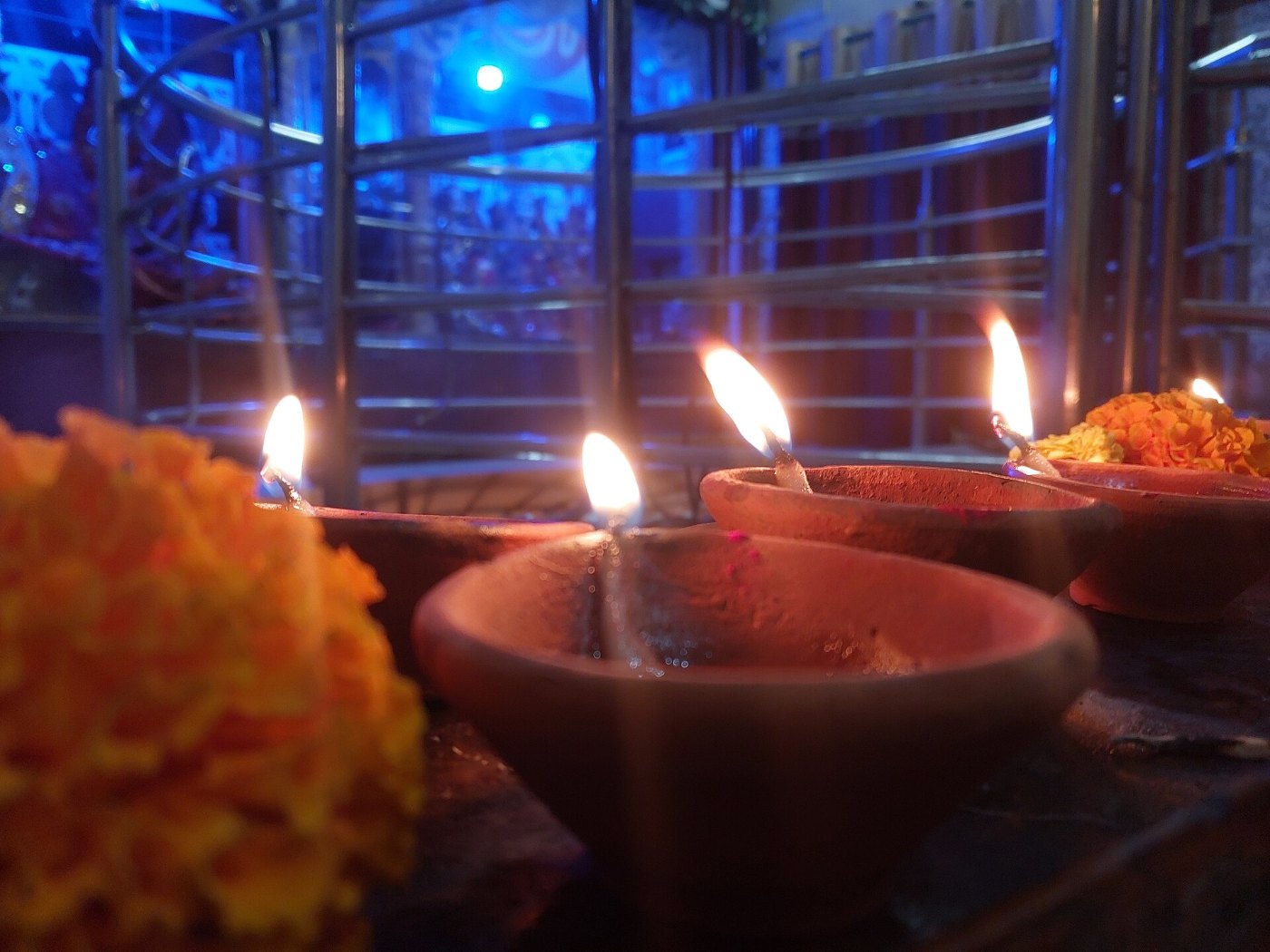
- Light a diya and spend a few quiet minutes.
- Cook a favourite dish of a loved one and share it with neighbours.
- Give a meal or groceries to someone who needs them.
- Write down family stories, or call an elder to hear them.
- Plant a sapling in the name of a family member.
Frequently asked questions
How many days is Pitru Paksha in 2026? 15 days, from 26 September to 10 October 2026, as per the New Delhi panchang.
Which is the main day? Many people treat Sarva Pitru Amavasya on 10 October as the most important day, especially when the tithi of a loved one is not known.
Can shraddh be done at home? Many families do a simple remembrance at home. Others prefer a river bank, a temple or a priest. It depends on family tradition.
Do dates change by city? Sometimes tithi timings shift by a few hours. Please check a local panchang.
What comes before this? Read our Ganesh Visarjan 2026 guide.
A note before you go
Pitru Paksha is personal, and every family has its own way of remembering. What matters most to many people is respect, gratitude and time spent with family. Sharad Navratri begins on 11 October 2026.
Sources
- Drik Panchang: Pitru Paksha 2026 shraddha dates for New Delhi
- ShubhDivas: Pitru Paksha 2026 dates and observances
- Rashtriya Panchang 1948 Saka (2026–27), Positional Astronomy Centre, IMD (official; tithi times checked here)
Dates checked on 20 September 2026.