Panchang for Wednesday, 23 September 2026 (Dwadashi, Nakshatra, Muhurat, Rahu Kalam)
Here is the panchang for Wednesday, 23 September 2026, published the evening before. It is a Dwadashi day, and the Rashtriya Panchang lists Vamana Jayanti on this date. All times are in Indian Standard Time (IST).

Prepared on Tuesday, 22 September 2026, 12:24 AM IST, for Wednesday, 23 September 2026. The Gregorian date and weekday are read from our publishing system’s clock, not typed by hand.
The date in three calendars
| Calendar | Date |
|---|---|
| Gregorian (English) calendar | Wednesday, 23 September 2026 |
| Vikram Samvat (Hindu lunisolar) | 2083, Bhadrapada Shukla Dwadashi (Trayodashi from 10:51 PM) |
| Shaka Samvat (Hindu lunisolar) | 1948, Bhadrapada Shukla Dwadashi (Trayodashi from 10:51 PM) |
| Shaka Samvat (Indian national civil calendar) | 1 Asvina 1948 (the first day of the month Asvina) |
Vikram and Shaka year numbers change at Chaitra Shukla Pratipada (March 2026) in most of north India. In Gujarat the Vikram year changes after Diwali (10 November 2026 this year).
When does the Hindu date change? (tithi timeline)
In the Hindu calendar the weekday changes at sunrise, but the tithi can change at any hour. The tithi running at sunrise gives the day its name. Timeline on the English clock, from the official Rashtriya Panchang (all times IST):
| Time (English calendar) | What changes (Vikram Samvat panchang) |
|---|---|
| Tuesday 22 Sep, 9:44 PM | Ekadashi ends. Dwadashi begins. Vishti karana ends, Bava karana begins. |
| Wednesday 23 Sep, 5:35 AM | The Sun enters tropical Libra (the September equinox). |
| Wednesday 23 Sep, about 6:19 AM (Ujjain sunrise) | Wednesday begins. The tithi at sunrise is Dwadashi, so 23 September is the Dwadashi day. |
| 9:09 AM | Nakshatra Shravana ends. Dhanishtha begins. |
| 10:22 AM | Karana Bava ends. Balava begins. |
| 4:27 PM | Yoga Sukarma ends. Yoga Dhriti begins. |
| 9:57 PM | The Moon moves from Makara to Kumbha. |
| 10:51 PM | Dwadashi ends. Trayodashi begins. Balava ends, Kaulava begins. |
| Thursday 24 Sep, about 6:19 AM | Thursday begins. The tithi at sunrise is Trayodashi. |
In simple words: on Wednesday 23 September, Dwadashi is in force all day until 10:51 PM. After 10:51 PM, Dwadashi ends and Trayodashi begins.
Panchang at a glance
| Item | Details |
|---|---|
| Day (Vaar) | Wednesday (Budhvar) |
| Month and paksha | Bhadrapada, Shukla Paksha |
| Tithi | Dwadashi until 10:51 PM, then Trayodashi (until 11:19 PM on Thursday) |
| Nakshatra | Shravana until 9:09 AM, then Dhanishtha (until 10:35 AM on Thursday) |
| Yoga | Sukarma until 4:27 PM, then Dhriti (until 3:55 PM on Thursday) |
| Karana | Bava until 10:22 AM, Balava until 10:51 PM, then Kaulava |
| Moon sign (Rashi) | Makara until 9:57 PM, then Kumbha |
| Vikram Samvat / Shaka Samvat | 2083 / 1948 |
Sun and moon (Ujjain)
| Event | Time |
|---|---|
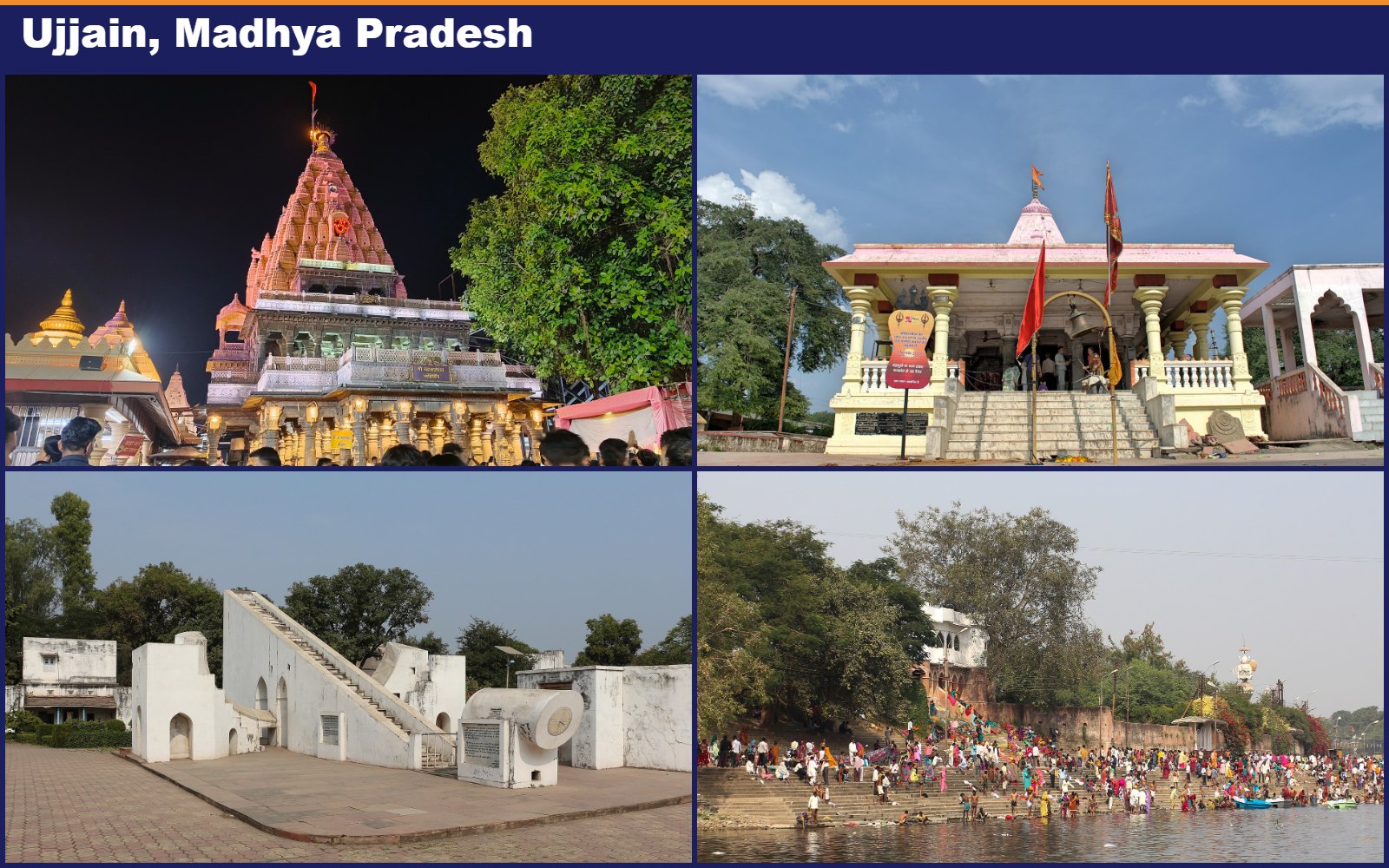
| Sunrise | 6:19 AM |
| Sunset | 6:18 PM |
| Length of day | about 11 hours 59 minutes |
| Moonrise | 4:23 PM |
| Moonset | 3:49 AM (24 September) |
Sunrise and sunset are shown the traditional panchang way (the centre of the Sun at the horizon). The sunrise you actually see is about 4 minutes earlier, and the visible sunset about 4 minutes later. Moonrise and moonset are calculated for Ujjain and can differ by 2 to 3 minutes between calculators.
Auspicious times (Shubh muhurat)
| Muhurat | Time |
|---|---|
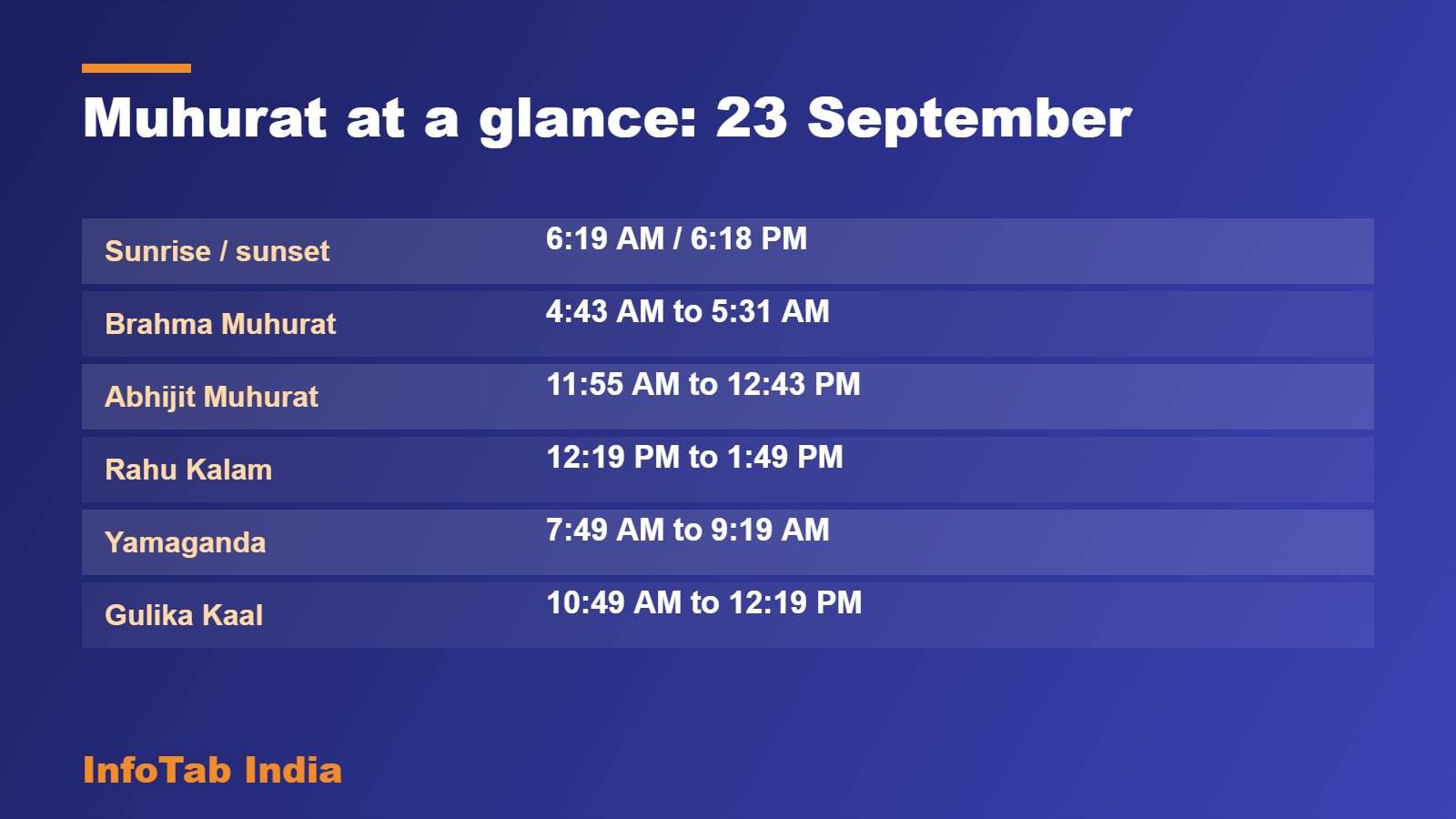
| Brahma Muhurat | 4:43 AM to 5:31 AM |
| Abhijit Muhurat | 11:55 AM to 12:43 PM |
Times traditionally avoided for new work
| Period | Time |
|---|---|
| Yamaganda | 7:49 AM to 9:19 AM |
| Gulika Kaal | 10:49 AM to 12:19 PM |
| Rahu Kalam | 12:19 PM to 1:49 PM |
About the day: Dwadashi and Vamana Jayanti
Dwadashi is the 12th tithi of a lunar fortnight. The Rashtriya Panchang lists Vamana Jayanti on 23 September, the day many people remember the Vamana avatar of Vishnu. It also lists Sravana Dwadashi (the Shravana nakshatra runs until 9:09 AM), Sakrotthana and Jalavisuva Day, and, for Muslim communities, Fateha Yazdaham (Giarhween Sharif), whose date follows the Islamic lunar calendar and moon sighting. Families who kept the Ekadashi fast traditionally break it on Dwadashi after sunrise; the exact time depends on your family’s tradition and your city, so please follow your local panchang or temple. Observances vary by family and community.
Why day and night are almost equal today
At 5:35 AM on 23 September the Sun crosses the celestial equator, the September equinox. In Ujjain the day is about 11 hours 59 minutes long (6:19 AM to 6:18 PM), almost exactly half of 24 hours. This is a seasonal event based on the tropical zodiac. The Hindu panchang uses the sidereal (nirayana) zodiac, which is about 24 degrees apart, so the Hindu Tula Sankranti falls later, in mid-October.
Coming up
- 25 September: Anant Chaturdashi and main Ganesh Visarjan. See our Ganesh Visarjan guide.
- 26 September: Pitru Paksha begins. See our Pitru Paksha guide.
- 11 October: Sharad Navratri begins.
How we checked these times
The tithi, nakshatra, yoga and karana times come from the official Rashtriya Panchang 1948 Saka (2026–27) of the Positional Astronomy Centre, India Meteorological Department. The book gives times for all of India in IST and has no separate Ujjain table, so the Ujjain sunrise, sunset, moonrise, Rahu Kalam and muhurat times are calculated for Ujjain and checked with our own astronomical calculation (the tithi, nakshatra and yoga end times matched the book within 2 minutes). Please follow your family’s or temple’s panchang for religious observances.